The British Film Institute — that venerable institution that preserves the world's largest film archive and encourages film production, distribution, and education — posted a list of what it (or one of its interns) considers the top 10 “great kung fu films.” This carefully curated listicle dates to 2014, but the titles it highlights are still applicable today. The selection includes “Enter the Dragon” (1973), “Fists of Fury” (1972), “King Boxer” (1972), “The 36th Chamber of Shaolin” (1978), “Dirty Ho” (1979), “Mad Monkey Kung Fu” (1979), “The Prodigal Son” (1981), “Iron Monkey” (1993), “Fists of Legend” (1994), “Drunken Master 2” (1994), and “Ip Man” (2008). Most of these films were produced in Hong Kong.
Hong Kong has been the epicenter of the martial arts film industry since the late 1960s and 1970s. In the 21st century, kung fu and martial arts movies are regularly made in other countries, including South Korea, Indonesia, and Thailand, as well as Japan, Vietnam, India and Australia. With “The Forbidden City,” Italy joins that list.
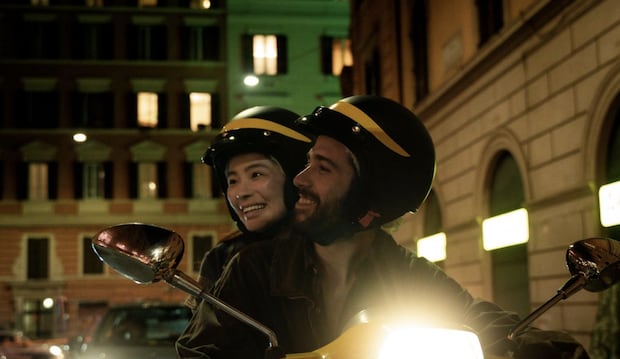
Directed by Gabriele Mainetti, “The Forbidden City” is an Italian kung fu action film that cleverly incorporates a volatile clash of cultures and a thematically compelling tapestry. The script skillfully balances character development, action and pacing. In his quest to make this tale transcend the traditional parameters of the action film template, Mainetti bends genres, injects Shakespearian cadence, and embellishes the drama with spaghetti western grit.
According to the film’s official synopsis provided by Well Go USA Entertainment, “The Forbidden City” is an action-packed tale of two strangers seeking a combination of truth and vengeance following a double homicide. Set against the backdrop of Rome’s seedy underworld, where human trafficking and ruthless exploitation are commonplace, the film is jam-packed with lightning-paced martial arts combat.
The story begins in China in 1995 during the country’s one-child policy initiative. Enforced between 1979 and 2015, the campaign was triggered by fears of overpopulation. Many families were restricted to a single child. In “The Forbidden City,” a family has two daughters: They protect the younger daughter by keeping her hidden from authorities. Both girls are given martial arts training by their father.
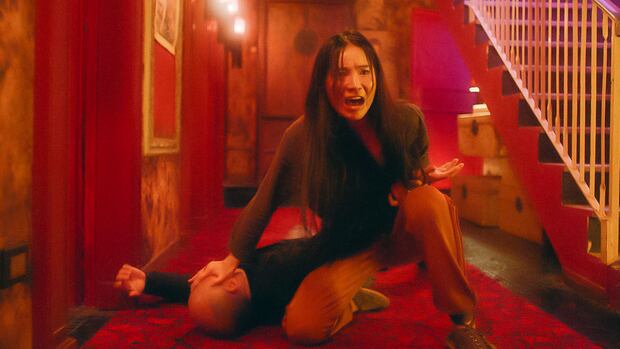
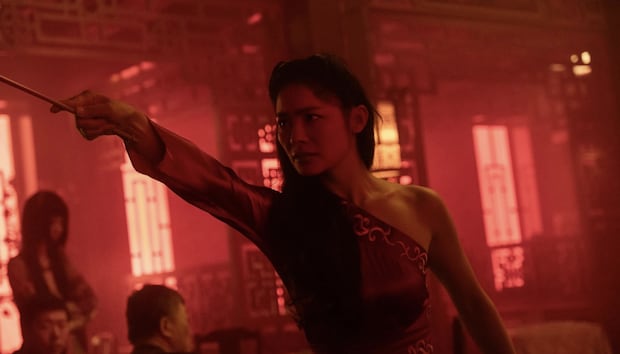
The film jumps to the present day. The younger daughter, Mei (Yaxi Liu), now an adult, arrives unceremoniously in Rome as part of a shipment of indentured women destined for sexual exploitation. But Mei has her own objective: She has traveled to Rome to find out what happened to her older sister, Yun (Haijin Ye). While the Chinese maitresse, played by Sheena Hao, forces the other women to strip, belittles them and assigns them to the brothel or the massage parlor, Mei sizes up the cadre of henchmen and awaits her first challenge. The maitresse soon realizes Mei is different: After Mei demands information about her sister, the henchmen move to subdue her. This first fight sequence sets the tone: Mei is skilled, efficient, and smart. She plows through the human traffickers, gradually making her way through a secret brothel. Here, she learns that her sister is no longer there. One of the older women sends her to a nearby restaurant, telling her to ask for its owner, Alfredo (Luca Zingaretti).
Instead, Mei finds Alfredo’s son, Marcello (Enrico Borello), in the kitchen of Da Alfredo trattoria. After she assaults him, he tells her his father has run off with “a Chinese prostitute,” leaving him and his mother to run the restaurant and deal with his debts.
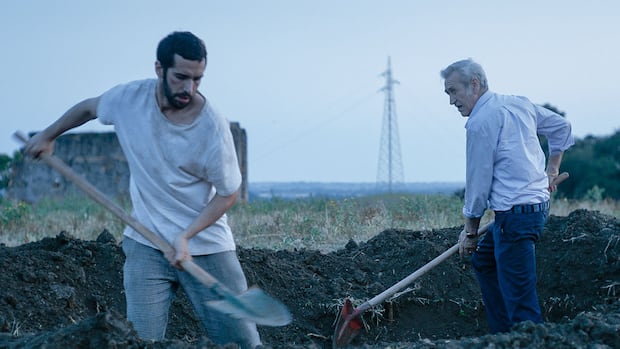
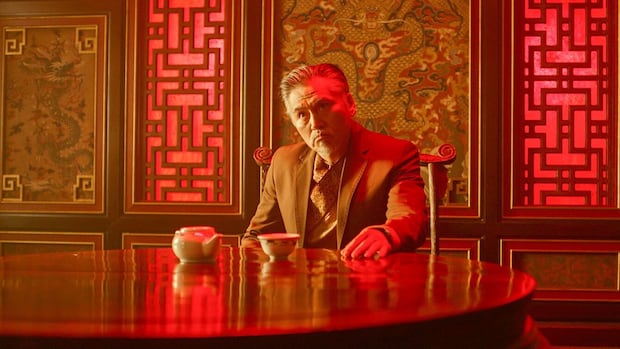
This is just the first act of a 138-minute film. Over the course of these scenes, the viewer has also been introduced to Marcello’s mother Lorena (Sabrina Ferilli), and the Chinese crime boss Mr. Wang (Chunyu Shanshan). The script switches gears briefly, toning down the action and establishing the film’s central mystery. Information leads Mei and Marcello to the outskirts of the city where they unearth two corpses: Yun and Alfredo are both dead. Mei responds with rage, immediately focusing on vengeance. Marcello is overcome with grief. After Mei leaves him at the gravesite, he calls his father’s best friend, Annibale (Marco Giallini).
“The Forbidden City” ripples with themes underscoring lives beset by overwhelming complications, suffering, poverty, and disenfranchisement. This includes the Chinese women caught in human trafficking and coerced into the sex industry. It also includes North African immigrants who find themselves indebted to members of the mafia who treat them atrociously. The villains outnumber the heroes in “The Forbidden City,” and each one — no matter their own ethnic background — is comfortable uttering vile racist slurs and demeaning and humiliating those they feel are inferior. In this regard, the film can be quite unpleasant at times. It is important to remember that despicable characters do and say loathsome things.
To contrast the ugliness of the film’s more horrid characters and intense brutality, the relationship that evolves between Mei and Marcello is touching but nuanced. The connection is clearly forged through trauma bonding. They share mutual grief, and the need to make a course correction. With all its elaborate plotting, memorable performances, and stunningly choreographed fight scenes, “The Forbidden City” is an entertaining female-led martial arts action film worth watching.
Lee Clark Zumpe is entertainment editor at Tampa Bay Newspapers, a Tomatometer-Approved Critic, and an author of short fiction. He can be reached by email at lzumpe@TBNweekly.com.