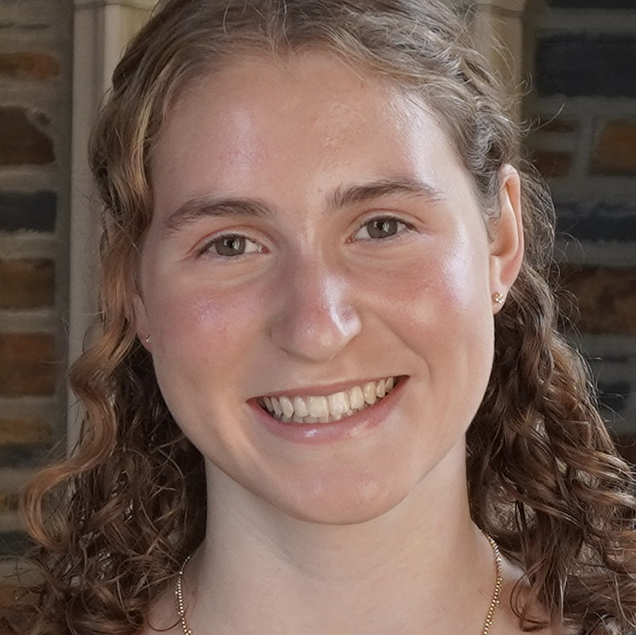
Laura Starkey greets the widow who picnics by her husband’s grave. She remembers the old woman who wove urns. She welcomes the children of a cancer patient, the parents of a young marine and the son of a cowboy.
Some of their loved ones were laid to rest in cotton shrouds, others in pine boxes or woven wicker coffins. They all chose burial at Heartwood Preserve, a 41-acre conservation cemetery in New Port Richey.
When Starkey founded Heartwood in 2016, few Floridians explored the concept of an eco-friendly funeral. Now, “conservation burials” — which place the deceased 3.5 feet underground, without embalming chemicals or concrete vaults — have boomed in popularity.
“People are just looking for something that’s more natural, that really brings them back to the earth,” Starkey said. “Whenever you have a really cool project that is taking off around the country, the market will respond.”

‘Connected to the earth’
The number of green burials has more than quadrupled in the past decade, according to nationwide data captured by New Hampshire Funeral Resources & Education. More Americans are choosing to be buried without embalming chemicals and in biodegradable containers, hoping to protect the natural environment after their death.
Conservation burials come with added legal protection for the dead and their families. An agreement between the cemetery and a land trust ensures that future development will never include human traces such as mausoleums or manicured lawns.
Starkey first stumbled upon the concept while researching ways to protect a portion of her family’s old cattle ranch from the pressures of development. She eyed a 41-acre section of the family property, which was sectioned off from the rest by a power line.
“I got excited about the idea of conservation burial as a tool for conserving the land,” Starkey said. “But the more I learned about it, I realized it was also a really cool thing for people to be connected to the earth, to be connected to this natural environment.”
Not all her relatives loved the idea, but neither the licensing board in Tallahassee nor community members mounted pushback. Green burials are legal and unregulated in 46 states, including Florida.
In 2016, Starkey began running the cemetery out of a small trailer in the gravel parking lot. She added a modest welcome cabin three years later, which provided a cool space for ceremonies, group meditations, family gatherings and Heartwood’s daily operations.
The preserve hosts between six and eight funerals each month. On top of services, Heartwood’s six-person team maintains the ecosystem through careful groundskeeping and controlled burns. Pine flatwoods and cypress wetlands fill the lush swath of Florida land, where 407 people are buried, and 360 more have claimed a final resting place.
When families wander inside the welcome center to make end-of-life plans, they’re greeted by cozy seating, warm wooden walls and a cup of coffee. Nicolle Meeke, Heartwood’s administrative specialist, goes over the basics.
Which section of the preserve would they like to be buried in? What traditions would they like followed? Have they contacted funeral homes to complete plans?
“When you have these kind of conversations, it really strips away all the superficial stuff that we tend to talk about,” said Will Lorenzen, who joined the Heartwood staff after serving as the executive director of the Tampa Bay Conservancy. “I came here for the environment, but the relationships that you have with these families are really cool.”

‘All the sense in the world’
The concept of returning directly to the earth has age-old roots in Jewish, Islamic and Native American tradition. Only recently have conservation burials gained traction for their environmental benefits.
According to Starkey, several of Heartwood’s clients considered cremation before learning that it emits roughly 500 pounds of carbon dioxide. That’s the equivalent of driving a car 578 miles, per the Environmental Protection Agency’s greenhouse gas equivalency calculator.
Green burials also appeal to consumers’ wallets, since they don’t include the cost of vaults or expensive coffins. The median price of a traditional burial and viewing is $8,300, according to the most recent data from the National Funeral Directors Association. A funeral with cremation comes in at just under $6,300. Heartwood’s full-body burials begin at $4,300.
Common concerns surrounding natural burial include groundwater pollution and animal disturbance. In some states, governments have regulated the distances between graves and potable water sources. However, a study from the Pan American Health Organization found “little evidence of microbiological contamination of groundwater from burial.” Starkey added that the standard green burial depth of 3.5 feet does not interfere with water nor attract animals.
Whether chosen for environmental, religious or financial reasons, conservation burials follow standard rules. All materials — from casket to clothing — must be biodegradable. People often choose cotton outfits, but the deceased have plenty of options, Starkey said. One man recently opted to be buried only in his leather cowboy boots.
As part of Heartwood’s funeral ceremony, family members lower the body into the ground and scoop dirt into the grave. Burial mounds — marked only with a small metal plaque — are decorated with native wildflower seeds, pine cones and palmetto fronds. Though some relatives enjoy tending to the gravesites, Starkey encourages them to let weeds and flowers grow free. She keeps a bin of seeds near the entrance of the welcome cabin, in case family members want to scatter them while visiting.
The preserve’s eco-friendly focus appealed to Larry Killmar and his wife, who spent their careers doing zoological work in San Diego and Tampa. The pair planned their burials after a visit in 2022, choosing plots near the welcome center.
“It just made all the sense in the world to us, since we’re both conservationists,” Killmar said. “You’re basically being returned to the earth, and you’re not polluting, and you’re not in a box.”
Roberta Santiago discovered Heartwood while helping a neighbor research burial options. Santiago passed the information on to her father, who insisted on visiting after reading through the preserve’s website. Natural burials are traditional in the Dominican Republic, where her family has roots.
“It was exactly what he was looking for,” Santiago said. “We’ll be there on the ground as a family, pray together and just let the whole thing naturally flow.”

‘This is just simple’
Starkey now has nearly a decade of experience managing conservation burials, and she is passionate about sharing her knowledge. She and a few other cemetery owners founded the Conservation Burial Alliance, a nonprofit focused on providing education about best practices within the industry. It has since grown to include 30 cemeteries.
“We exist for the dual purposes of supporting each other ... and just being one solid source of information of what it means to be a conservation burial ground,” Starkey said.
She credits her parents for supporting her vision from the start. She buried her mother on the preserve’s grounds almost two years ago, and her father has the adjacent plot reserved. He’s the one who came up with Heartwood’s name — inspired by the term for the core of a pine tree — and gifted her a heart-shaped piece of wood that rests on her office desk.
Starkey often wanders along the north border of the preserve to admire the wildflowers and tree seedlings that cover her mother’s final resting place.
“She would be so glad to know that she’s got more wildflowers on her grave than anybody in the entire area,” Starkey said. “She was a big fan of natural Florida wildflowers.”

The 60-year-old founder has her own plot picked out, in a portion of the cemetery surrounded by cypress wetlands. Her husband is constructing a nearby pavilion and placing surveying pins, which will allow visitors to explore the new section.
Starkey doesn’t need a map to recognize the graves scattered between the palmetto fronds. She considers every visitor and client a part of the “Heartwood family,” connected both by loss and the piece of Florida they chose to keep alive after death.
“In a world where everything is getting infinitely more complicated, and we’re all overwhelmed … this is just simple,” Starkey said. “It’s your final act that is giving back to the earth.”
The Tampa Bay Times launched the Environment Hub in 2025 to focus on some of Florida‘s most urgent and enduring challenges. You can contribute through our journalism fund by clicking here.