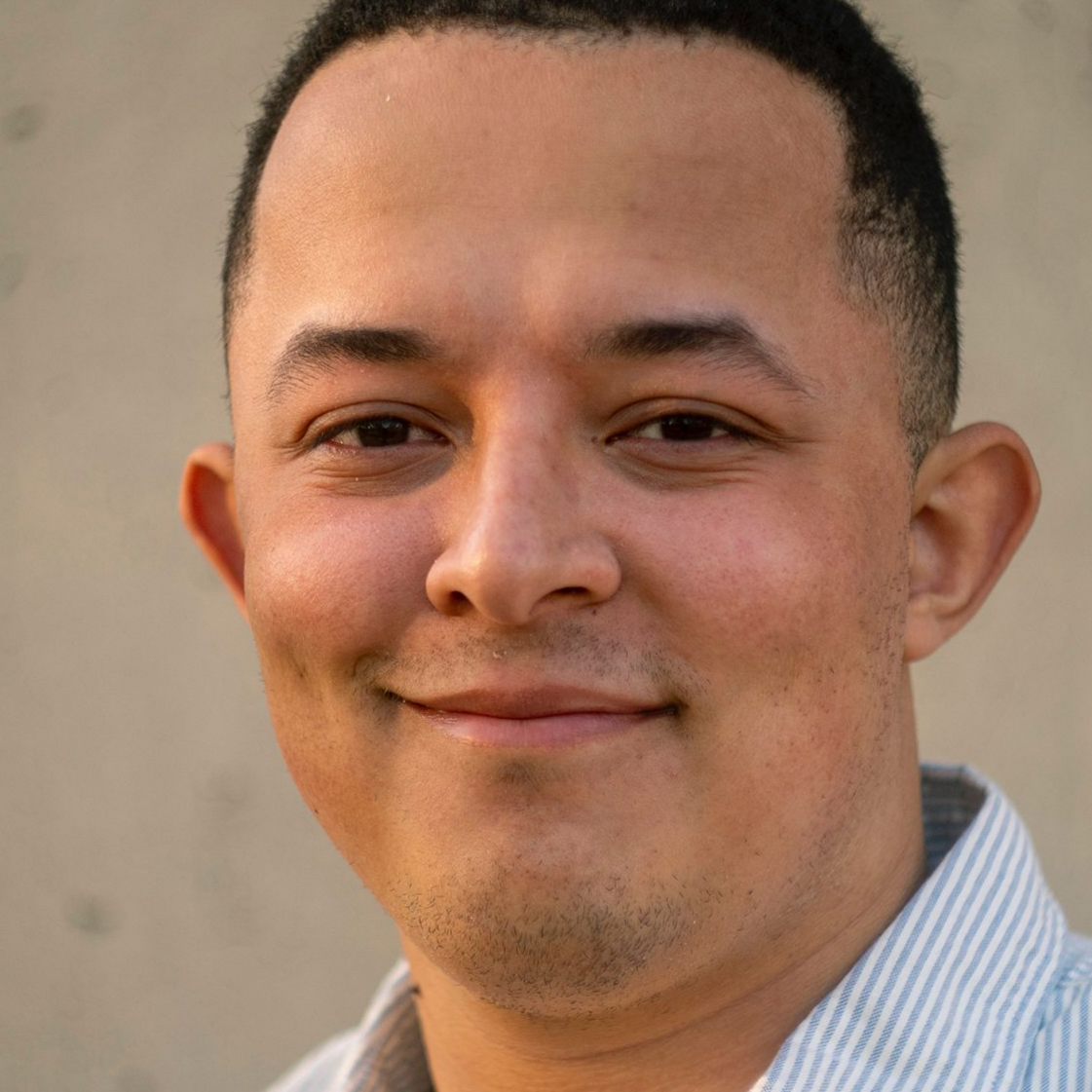
Dewey and Becky Mitchell still have questions about the final day of their son’s life.
Had his anxiety and depression resurfaced?
Was he struggling with recovery?
Why did he take the laced anxiety drug that killed him?
In their haze of uncertainty, though, the Mitchells are certain of a few things.
They want to support young adults struggling with addiction.
They don’t want another parent to have to bury their child.
They want to honor the son they’ll never see grow up.
The couple has donated $1 million to Saint Leo University, seed money for the Derek J. Mitchell Collegiate Recovery Program. It will be the first in Florida to provide housing for college students in recovery from drug and alcohol addiction.
The Mitchells, a family of farmers and developers who shaped what Pasco County looks like today, pray the program can save lives.
They pray that those students will see a future Derek never did.
Growing up a Mitchell
Derek Mitchell was bright from the start, his parents remember.
“He was one of those little babies who was constantly just taking the world in. You could see it in his eyes,” said Becky, a former special education teacher.

Derek grew up on the Mitchell family ranch. His youth was spent fishing in the pond, sitting on his parents’ laps to “drive” their car and riding four-wheelers.
Derek and his little sister, Carly, were each other’s playmates, companions in a rural environment miles from other kids. Their parents marvel at how close the two were.
“There were a lot of eyes on us when we were younger all the time, coming from a more prominent family,” Carly said. “Between feeling the pressure of all that … he was overprotective of me. I was overprotective of him.”
The Mitchell ranch, which at its peak stretched 13,000 acres, had been acquired by Dewey’s grandfather, a rancher who traded and bartered his way to own land that now is home to shopping centers, community parks, public schools, supermarkets and chain restaurants.

As Derek grew from childhood to adolescence, certain traits began to harden.
He was a great enough test-taker that he struck deals with teachers at his high school to eschew homework and base his grade just on tests. He was athletic, competing in basketball, football, swimming, weightlifting and tennis. He had a strong sense of justice, and people gravitated toward him, despite his quiet demeanor.
He loved pranks, a trait he got from Dewey. Becky can never forget the time she came home, horrified to see their dog, a mutt named Buster, with his fur dyed to look like a skunk.
A story of recovery
Nobody is exactly sure when Derek’s addiction started.
Dewey thinks his son started experimenting with pot in high school. Becky thinks middle school.
James Lawless, one of Derek’s closest friends, remembers Derek trying opiates when the two were playing high school football together.
“It was the pills that took him in a direction that he just couldn’t get away from,” Lawless said.

After high school, Derek went to Florida State University, triple majoring in entrepreneurship, business and real estate. He graduated cum laude and set his sights on working in the construction industry.
Beginning in graduate school at the University of Florida, Derek saw cycles of relapses and recovery, weeks when he’d excel at his studies and weeks he’d disappear from class. He spent a stint at a center in Clearwater, another at one in Austin, Texas.
There, he got to see Carly, who was living about an hour away. Derek started working at the rehab program, then got a job as a project manager for an international contracting firm.
Derek started doing Oxycontin, Becky said. This time, he knew he needed to get help. So he went to another center in Arizona, living with a roommate from the recovery program. He started working in construction again. Dewey and Becky remember him doing well.

Then, COVID hit. Derek lost access to his doctors. Basketball and yoga, activities that helped keep Derek healthy, were harder to access. He quit his job, grew anxious and depressed. The counselor he had been seeing retired and for a while Derek went without mental health care.
He planned a trip to see Carly and his parents. He’d been talking about staying with his parents again, spending some time on family land until he could find a place to stay.
“He was really looking forward to coming back,” Becky said. “We’re not real sure what happened other than the fact that he was feeling real anxious and got a street drug to make him feel better.”
Derek died on April 20, 2021. He had purchased a pill he thought was Xanax. It was laced with fentanyl. The combination was lethal.
Becky received the call at 3 a.m. When a police officer told her that her son was dead, she didn’t believe it.
One night, as Derek’s body was returning to Tampa following his autopsy, Becky was praying.
“I said, ‘God, I can’t do this. We cannot do this on our own. There’s no way. We can’t bear this. You got to help get us through it,’” she said.
Then, Becky swears, the door opened. And she saw a vision of Derek in his blue jeans, red shirt and baseball cap. It was as if he was there in the flesh.
“He said, ‘Hey Ma Dukes’ with a big old smile on his face,” Becky said, crying. “I just really felt like God was telling me that everything was going to be OK.”
A legacy built
Jim Burkee met Dewey Mitchell his first week as president of Saint Leo, an idyllic Catholic university where palm trees and Benedictine monks dot the landscape.
Dewey — who previously served as the university’s board chairperson — was invited by another administrator, who told Burkee to listen to Dewey’s story about his son.
Burkee himself knew of a program for college students in recovery at Augsburg University in Minneapolis. What if, he wondered, they could start a similar program for students in recovery at Saint Leo?
The men went to Augsburg and sat with students and staff, asking about the program’s inner workings. What struck Dewey was the students’ ability to stay clean while in a potentially tempting environment, Minneapolis, a city that struggles with open-air drug markets.
“There’s no question that any of these kids could walk right outside and pick up anything they want to pick up,” he said. “The fact that they’re able to stay sober ... that they have a chance to have a wonderful life ahead of them, that was impressive to me.”
When Dewey came home, he told Becky that starting a program at Saint Leo was what God needed them to do.
She agreed, and after Burkee and his staff devised a program heavily modeled after Augsburg’s, the Mitchells donated $1 million for the university to start the program. It would be named for Derek.

The program will be for students who are six months clean. They will have dedicated housing, residential counselors and staff to support them through their journeys in recovery and academia.
The program may have a few students this upcoming fall semester, Burkee said. He estimates that it will be fully staffed by next fall.
The goal is to serve 50 students in three years’ time, with a total fundraising target of $10 million to support the program in perpetuity. Students can apply now.
For those who knew him, Derek’s legacy exists outside of the program as well.
For Ray Cantwell, one of Derek’s best friends, Derek exists in the stories he tells his kids.
Derek exists in the pictures and videos Carly shows her sons, his nephews.
For Dewey, it’s in the laughs he can finally enjoy when he thinks of his son.