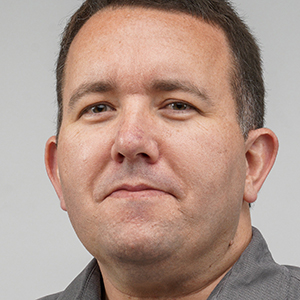
Brandon Whitworth was a man who worked hard and loved his family but struggled with drugs and mental illness. In recent years, he’d lived in homeless camps off State Road 52. He carried a Bible everywhere he went.
On Oct. 2, a Pasco County sheriff’s deputy shot him to death behind a Hudson convenience store.
Sheriff’s officials said he’d made threats and carried a knife.
His family questions the official explanation. They believe he posed no imminent threat and that the deputy was too quick to use deadly force. They are considering legal action.
His brother, Brian Whitworth, said he hasn’t eaten or slept since he saw video, posted on social media, of his brother being shot. His last words — “I don’t got nothing” — echo in his mind.
“He executed my brother,” he said.
21-second video showed deadly shooting

Whitworth, 49, was shot shortly after sheriff’s deputies responded to a call of a person trespassing near a Publix at 12101 Little Road in Hudson. Authorities say they encountered Whitworth in a nearby parking lot, armed with a knife.
Sheriff’s Col. Jeff Harrington said in a news conference hours afterward that the deputy fired out of concern for nearby bystanders. Whitworth, he said, did not attack the deputies or anyone else.
“At any given time, that individual could have made the decision to act and attack them with the knife that he refused to put down,” Harrington said.
The sheriff’s office on Monday identified the deputy who fired the fatal shots as Jarrod Fredrickson. He has worked for the agency since July 2024. It was not immediately clear whether he had previously used deadly force against a suspect.
The Florida Department of Law Enforcement will investigate the shooting, sheriff’s officials said. The Pinellas-Pasco State Attorney’s Office will likewise work to determine whether the deputy’s actions were justifiable.
The sheriff’s office’s account of the events began with a call they received about noon Friday from a store manager at the Publix.
Whitworth was described as walking around “yelling, screaming” and “threatening folks,” Harrington said. The manager asked that he be given a trespass warning from the business.
Fredrickson and another deputy pulled up about 12:30 p.m. to the large shopping plaza, just north of State Road 52. A Chevron gas station and Express convenience store sit at the plaza’s north end.
It was there, in an empty parking area behind the Express, that the deputies encountered Whitworth.
They “went to challenge” him, Harrington said. Whitworth “armed himself with a 7½-inch butcher knife.”
Body-worn camera footage later released by the sheriff’s office is too blurry to clearly make out a weapon.
In the 21-second clip, the deputy grips a gun with both hands, aiming toward Whitworth, who stands roughly 30 feet in front of him. Shirtless, Whitworth wears dark shorts and carries a plastic grocery bag in his left hand. It is unclear if he holds anything in his right.
He stands near a raised sidewalk that runs alongside the store’s rear wall. His arms hang at his sides, his chest thrust outward as he stares at the deputy.
“Put it down!” Fredrickson shouts repeatedly. “Drop the knife! Drop it!”
Another person, apparently a civilian, sits on a raised curb behind Whitworth. A Pasco County sheriff’s SUV is parked roughly 50 feet to his right. From it, the second deputy emerges, walking slowly toward Whitworth.
Whitworth spoke quietly between the deputy’s commands.
“Look, bro,” he said, before uttering an obscenity.
In the video, Whitworth turns away and takes three steps to the side, toward the sidewalk. Fredrickson then immediately fires four quick gunshots.
Whitworth does not appear to react. Then come two more gunshots.
He jerks away, stumbling toward the wall. The deputy fires a seventh gunshot. Whitworth takes a couple of steps back. Then comes an eighth gunshot before he collapses to the ground, moaning.
“Drop it!” the deputy shouts again.
“I don’t have nothing,” Whitworth groans.
All eight gunshots, according to the video, were fired within six seconds. It is unclear how many times Whitworth was hit.
The deputies summoned paramedics, who took him to a hospital, where he was declared dead.
Video raises questions
Experts in police use of force who viewed the body-worn camera video said there is not enough information to say whether the shooting was justifiable. But the footage raises questions.
Geoffrey Alpert, a professor of criminology and criminal justice at the University of South Carolina who has researched high-risk police activities for more than three decades, said police are trained to constantly reevaluate threats in the moment they have to decide whether to use deadly force.
A full investigation will yield details about how far the deputies were from Whitworth, whether he was wielding a knife and whether he was walking away or toward someone.
“I couldn’t tell what the threat was,” Alpert said of the footage. “If the threat ended, then there is no justification for the use of deadly force.”
He noted that officers must also take stock of their surroundings, like the backdrop where bullets could land and whether bystanders are in the vicinity.
The body-worn camera video shows cars in the distance behind Whitworth when the deputy fired at him. Harrington acknowledged that one car’s window was shattered by the gunfire.
Video shared on social media afterward showed marks on the convenience store’s rear wall, apparently from bullets ricocheting.
“It doesn’t look like the deputy was a particularly accurate marksman, which is in itself problematic,” said Dennis Kenney, a professor at the John Jay College of Criminal Justice.
The decision to use deadly force, Kenney said, is generally reserved for situations where an officer or deputy has reason to believe their life or another person’s life is at risk. Much may depend on what’s not shown on the video and what occurred in the store.
“If he was threatening to stab people, then I think that gives the deputies a bit more latitude,” Kenney said. “If he was just being obnoxious, then less so. I think the context probably matters a great deal in evaluating it.”
“At this point, I didn’t see the risk,” he said.
‘They didn’t have to kill him’
State records show Whitworth had many run-ins with police. He’d been arrested in recent years on charges of trespassing, petit theft and drug possession. He served a few short stints in state prison for convictions that included grand theft, battery and obstructing a criminal investigation.
But the records also show Whitworth struggled with mental illness. Last year, prosecutors dropped a misdemeanor theft charge against him after he was deemed incompetent to face trial.
He’d spent time in psychiatric hospitals in Tallahassee and Gainesville, his family said. With little money and no insurance, he struggled to obtain his prescribed medication. It’s not clear what his diagnosis was, but his family said he often spoke to himself and expressed paranoia.
“He would cry out for the help, but nobody would hear him,” said his sister-in-law, Rhoda Toth. “He would beg for the help and they just didn’t want to help him or there was no resources or the beds were full or there was no money to get his medication.”
Toth tried to help. Whitworth sometimes stayed with her at a home on Teak Street in Hudson, less than a mile from where he was killed. She’d give him money and food. Sometimes, she said, he’d take food and give it to other people without homes.
Not long before he died, he’d proudly told her about how he helped an old man who’d fallen in the store parking lot. He said he got the man up, picked up his groceries and helped him into a car, Toth said.
He worked odd jobs, like laying tile and installing screens, but his mental health problems made steady work difficult.
He was a deeply religious man, his family said. He carried a little brown Bible with him. They believe it’s what was in the grocery bag he carried when he was shot.
His niece, Jessica Webb, said she sometimes went looking for her uncle in homeless camps in Hudson.
One of the last times she saw him, he took with him a picture her daughter had colored of a kitten wearing a tiara. He wrote her phone number on the back of it, tucked it in his backpack and said he would remember to call her.
She last got a call about a month ago. He told her he was OK. He told her he loved her.
The family has expressed their outrage on social media. They say they are looking into hiring a lawyer.
“He was just trying to live his life without being a burden to anybody,” said Brian Whitworth. “They didn’t have to kill him.”